Ever wondered how those epic clashes between the galaxy's most terrifying creatures fit into the grand scheme of things? You’re not alone. The question of Alien vs. Predator (AVP) Films: Where They Fit in the Timelines has been a hot topic among fans for decades, sparking debates that are almost as intense as a Xenomorph-Yautja showdown. It's a fascinating puzzle, one that asks us to navigate not just one, but often multiple cinematic universes.
For many, the appeal of AVP lies in its sheer spectacle: two iconic titans going head-to-head. But for the dedicated lore masters, pinning down its chronological location relative to the Alien and Predator sagas is crucial. Is it a prequel? An alternate reality? A tangent? Let's dissect the timeline, film by film, and arm you with the knowledge to confidently discuss where these crossover events truly land.
At a Glance: Key Takeaways on the AvP Timeline
- Separate Timelines: The Alien vs. Predator films (2004, 2007) generally exist within their own distinct timeline, largely independent of the main Alien and Predator movie canons.
- Prequels, But Not Quite: They are chronologically set before the main Alien films, specifically Alien (1979), but they contain elements that directly contradict established Alien and Predator lore.
- Weyland's Role: The first AvP film introduces Charles Bishop Weyland, founder of Weyland Corporation, decades before Peter Weyland in Prometheus, creating a significant timeline conflict if viewed as a single, contiguous universe.
- Ancient History: AvP delves into ancient human history, showing Predators hunting Xenomorphs on Earth for millennia.
- Most Fans: Tend to view AvP as an enjoyable, self-contained diversion rather than strictly canonical to the main sagas.
The Fan's Dilemma: Why Timeline Placement Haunts AvP
For properties with deep lore like Alien and Predator, continuity is a sacred cow. Fans invest in the unfolding narratives, the evolution of species, and the machinations of powerful corporations like the shadowy Weyland-Yutani Corporation. When a crossover event like AvP arrives, it promises to tie everything together. Yet, it often introduces new elements that don't quite sync up with established histories, creating a fascinating challenge for those who crave a seamless narrative.
The core issue stems from the fact that while AvP draws heavily from the mythos of both franchises, it was developed by different creative teams at different times, with varying degrees of reverence for pre-existing canon. This isn't necessarily a bad thing – it can open up exciting new storytelling avenues – but it does require a bit of mental gymnastics for dedicated followers.
Dissecting the Core Franchises: A Quick Chronology Primer
Before we dive into where AvP fits, it’s helpful to briefly outline the established (or generally accepted) timelines for the Alien and Predator films in isolation. This will provide the necessary context to see where AvP diverges or aligns. If you're looking for a deep dive on all the films, we've got you covered in our guide to the Alien and Predator movie order.
The Alien Chronology: From Engineers to Xenomorphs
The primary Alien film timeline, often referred to as the "core canon," generally flows as follows:
- Prometheus (2012): 2093 CE. Explores the origins of humanity and the Engineers, introducing early forms of the black goo and proto-Xenomorphs on LV-223.
- Alien: Covenant (2017): 2104 CE. A direct sequel to Prometheus, detailing the horrifying creation of the perfected Xenomorph by David and the Covenant colony ship's tragic fate.
- Alien (1979): 2122 CE. The original nightmare aboard the Nostromo on LV-426, introducing the iconic Xenomorph in its most terrifying form.
- Aliens (1986): 2179 CE. Ripley returns to LV-426, now colonized, for an epic battle against an alien queen and her swarm.
- Alien 3 (1992): 2179 CE. Ripley crash-lands on Fiorina "Fury" 161, a penal colony, bringing an unwelcome guest with her.
- Alien Resurrection (1997): 2379 CE. Set 200 years after Alien 3, a cloned Ripley and a new crew face off against hybrid Xenomorphs created by military scientists.
Noticeably, there are no Predators in this established sequence. The focus remains squarely on the terrifying evolution of the Xenomorph and humanity's struggle against it.
The Predator Chronology: From Ancient Hunts to Modern Mayhem
The Predator film timeline, while having fewer entries, also spans a significant period, though its connections are looser:
- Prey (2022): 1719 CE. A Comanche warrior woman encounters a technologically advanced Feral Predator, marking the earliest known human-Predator conflict on Earth. This film is generally considered a hard reboot or a distinct timeline for Predator, though it could fit into the broader Yautja history.
- Predator (1987): 1987 CE. Dutch Schaefer and his commando unit are hunted by a fearsome Predator in the jungles of Central America.
- Predator 2 (1990): 1997 CE. The action moves to Los Angeles, where a different Predator hunts gang members and Detective Mike Harrigan. This film famously features a Xenomorph skull Easter egg, hinting at the future AvP crossover.
- Predators (2010): 2010 CE. A group of human killers are abducted and dropped onto a game preserve planet, hunted by different, larger "Super Predators."
- The Predator (2018): 2018 CE. Genetically enhanced "Upgrade Predators" arrive on Earth, leading to a confrontation involving ex-soldiers and a genetically altered boy.
Like the Alien films, the main Predator timeline doesn't explicitly feature Xenomorphs as a primary threat or ancient adversary, save for the aforementioned Easter egg.
Where Alien vs. Predator Films Land: A Distinct Chronology
Now, let's bring in the crossover films. The general consensus, heavily supported by the narrative inconsistencies, is that the AvP films occupy their own timeline. They are prequels to Alien but not direct prequels to Prometheus or Covenant.
Alien vs. Predator (2004): The Initial Encounter
- Year Set: 2004 CE
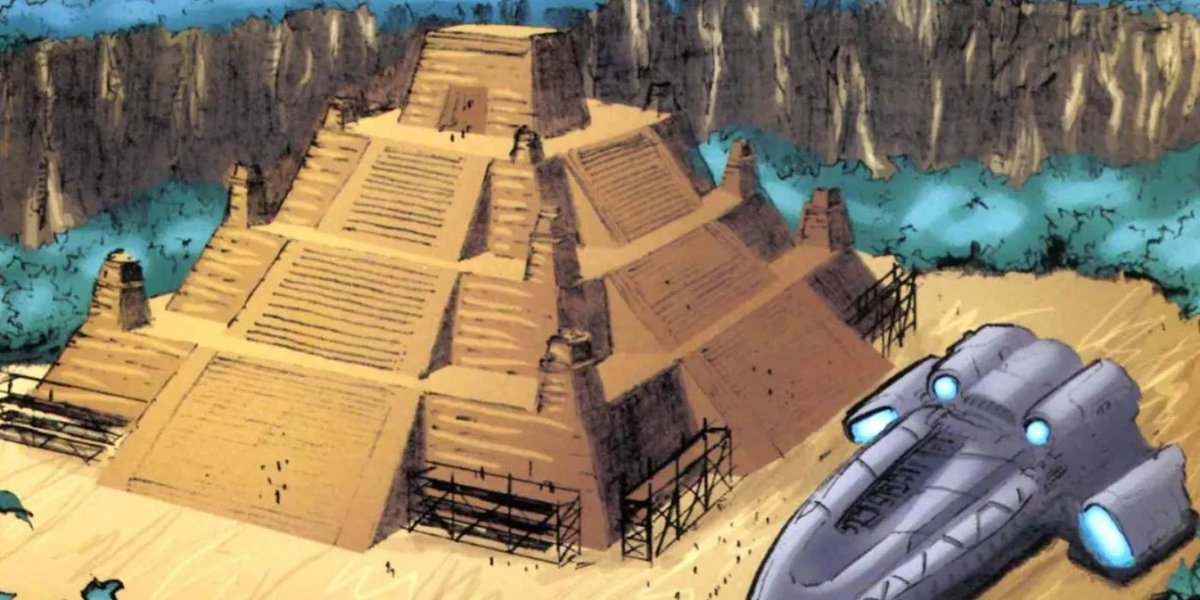
- Key Plot: A mysterious heat signature in Antarctica draws a research team, led by billionaire industrialist Charles Bishop Weyland, to an ancient pyramid beneath the ice. Unbeknownst to them, this pyramid is a hunting ground and temple for Predators, where they awaken a captive Xenomorph Queen to train their young hunters against her offspring. Humanity is caught in the middle.
Timeline Implications:
- Weyland's Age: This is the most glaring chronological conflict. Charles Bishop Weyland (played by Lance Henriksen, reprising his Bishop android likeness from Alien and Aliens) is the founder of the Weyland Corporation and dies in 2004. However, Prometheus introduces Peter Weyland (Guy Pearce) as the founder, a much younger man embarking on the Prometheus mission in 2093, and still alive via hologram in Alien: Covenant in 2104. For the timelines to merge, Charles Bishop Weyland would have to be Peter Weyland's grandfather or great-grandfather, which isn't suggested. The "Bishop" character in Alien and Aliens is an android modeled after Charles Bishop Weyland, indicating that the corporation founder existed before the android's creation, thus pointing to a separate timeline for AvP where this iteration of Weyland is the founding figure.
- Ancient Predators on Earth: AvP establishes that Predators have been visiting Earth for thousands of years, building temples and hunting Xenomorphs as a rite of passage. This is a significant piece of lore that is never referenced in the main Predator films (which depict Predators as more recent visitors, though Prey does push their visits back to 1719).
- Xenomorph Lifecycle & Queen: The film depicts a well-established Xenomorph lifecycle and the presence of a Queen, implying a long history for the species on Earth or nearby, which doesn't align with the Prometheus/Covenant narrative of their creation being much more recent (late 21st century) and their spread being nascent.
- Technological Level: The human technology in 2004 is fairly advanced but doesn't feel drastically different from contemporary tech, nor does it foreshadow the massive leaps seen even a century later in Prometheus.
Conclusion for AvP (2004): It's a clear prequel to the events of Alien, showing the Xenomorphs before the Nostromo's encounter. However, due to the Weyland discrepancy and the established ancient history of both species on Earth, it firmly carves out its own distinct continuity, separate from both the Alien prequel films (Prometheus, Covenant) and the main Predator films.
Alien vs. Predator: Requiem (2007): The Unraveling
- Year Set: 2004 CE (immediately following the first film)
- Key Plot: A Predator spaceship carrying a chestburster from the first film crashes near a small Colorado town. This leads to the birth of the Predalien (a Xenomorph-Predator hybrid) and a subsequent Xenomorph infestation. A lone "Cleaner" Predator is dispatched to eliminate the evidence, leading to a brutal, no-holds-barred conflict.
Timeline Implications:
- Direct Sequel, Same Timeline: Requiem picks up directly where AvP left off, reinforcing its place within that specific AvP timeline. It doesn't attempt to bridge the gap with the main Alien or Predator narratives.
- Predalien: The introduction of the Predalien, a hybrid of the two species, is a unique element to the AvP timeline. While genetic manipulation and hybrid forms appear in Alien Resurrection (the Newborn), the Predalien's existence and life cycle are specific to this crossover.
- Weyland-Yutani's Early Involvement: The film ends with the surviving Xenomorph samples being handed over to Mrs. Yutani, hinting at the future formation of the Weyland-Yutani Corporation. This, again, positions the AvP timeline as a precursor to Alien but an alternative to Prometheus, where the company is already well-established.
Conclusion for AvP: Requiem (2007): It solidifies the AvP films as a standalone duo. While it provides an interesting "origin" for how Weyland-Yutani might have acquired its first Xenomorph specimen (a plot point absent in the Prometheus/Covenant timeline), it does so by continuing the narrative established in AvP (2004), which already operates on its own canonical path.
The Great Divide: Why AvP Stands Apart (Mostly)
The reason for this timeline segregation isn't necessarily a flaw, but rather a consequence of Hollywood's approach to franchise management.
The Canonical Conundrum: AvP as Its Own Canon
When Alien vs. Predator was greenlit, the prevailing mindset was to create a fun, action-packed crossover that drew on the popular elements of both series. The comics and games had already done this for years, creating their own rich, often contradictory, lore. The film aimed to be the cinematic realization of that concept.
However, subsequent films in the Alien franchise (Prometheus, Covenant) chose a different path, charting a new course for the Xenomorph's origins that fundamentally contradicted the AvP narrative. Similarly, recent Predator films like Prey have either ignored or indirectly contradicted the AvP lore.
This leads to the generally accepted understanding:
- Alien Universe: Prometheus, Covenant, Alien, Aliens, Alien 3, Alien Resurrection.
- Predator Universe: Predator, Predator 2, Predators, The Predator, Prey.
- Alien vs. Predator Universe: Alien vs. Predator, Alien vs. Predator: Requiem.
Each operates as its own, mostly self-contained, cinematic continuity.
Points of Contention and Divergence
Let's summarize the biggest reasons why the AvP films don't seamlessly integrate into the main timelines:
- Weyland's Identity and Timeline: The most significant hurdle. Charles Bishop Weyland (AvP) versus Peter Weyland (Prometheus/Covenant) are two different individuals occupying the role of company founder, decades apart, with conflicting histories.
- Xenomorph Origins: In AvP, Xenomorphs have been on Earth (or brought there by Predators) for millennia. In the Alien prequels, the Xenomorph is a relatively recent creation (late 21st century) orchestrated by David, the synthetic. These two origins are irreconcilable within a single timeline.
- Predator Motivation/History on Earth: AvP portrays Predators as ancient, ritualistic hunters on Earth, using Xenomorphs as prey. The main Predator films, while showing Yautja hunting humans, don't feature this specific ancient Earth-Xenomorph connection.
- Technological Discrepancies: While less impactful, the tech levels between 2004 (AvP) and 2093 (Prometheus) don't quite align if AvP is meant to be a direct precursor to the main Alien saga.
Key Timeline Markers in AvP Films
Despite the canonical divide, the AvP films do establish their own internal chronology and lore:
- ~3000 BCE: Predators begin visiting Earth, building temples in honor of their hunts, and cultivating Xenomorphs for ritualistic battles. They are revered as gods by early human civilizations.
- 1904 CE: An ancient Predator temple beneath Bouvetøya (an island near Antarctica) is abandoned due to a Xenomorph outbreak.
- 2004 CE: The events of Alien vs. Predator. The temple is rediscovered, leading to the battle between humans, Predators, and Xenomorphs. Charles Bishop Weyland dies.
- Later 2004 CE: The events of Alien vs. Predator: Requiem. A Predalien is born, a ship crashes, and a Xenomorph outbreak devastates Gunnison, Colorado. A lone Predator "Cleaner" is dispatched. The film concludes with the acquisition of Xenomorph technology by Mrs. Yutani.
This self-contained narrative offers a rich, if separate, history for those who enjoy the specific blend of Alien and Predator lore presented in these films.
Navigating the Multiverse (or Multi-Timeline): Your Options as a Fan
So, how do you make sense of all this? As a fan, you have a few ways to approach the AvP films in relation to the broader franchises:
Option 1: The "Everything is Canon" Approach (with caveats)
This approach attempts to reconcile all films into a single, overarching timeline. It requires significant mental gymnastics and often involves ignoring or reinterpreting contradictory details. For instance, you might argue that Charles Bishop Weyland was a different founder than Peter Weyland, or that the Xenomorph origins in Prometheus are just one origin, and the AvP events represent an earlier, forgotten one. This is the least common and most challenging approach for AvP due to the sheer number of contradictions.
Option 2: The "Separate Canons" Approach (Most Common)
This is the path most fans and even the creators of the newer films implicitly take. You enjoy each franchise (Alien, Predator, AvP) as its own self-contained narrative.
- Alien films: Follow their consistent timeline.
- Predator films: Follow their own, often loosely connected, timeline.
- AvP films: Are an entertaining "what if" scenario, or their own distinct universe, offering a fun crossover without needing to fit perfectly into the others. This allows you to appreciate each film on its own merits without worrying about plot holes. The
avpcentral.comsource mentioning "separate Alien, Predator, AvP, and movie specific timelines" directly supports this view.
Option 3: The "Head-Canon" Approach
You decide what works for you. Maybe you prefer the AvP films to be canonical to the Predator franchise but not the Alien one, or vice-versa. You might pick and choose elements from each to create your ideal universe. This personal interpretation is a powerful way to engage with complex fictional worlds.
Beyond the Silver Screen: AvP in Expanded Universe
It's worth noting that the "Alien vs. Predator" concept didn't originate with the films. It exploded in popularity through comics, novels, and video games long before 2004. These AvP comics and games timelines often explored even more diverse and conflicting narratives, proving that the appetite for these crossovers is immense, even if the cinematic timelines are messy.
These expanded universes often feature their own distinct timelines, or sometimes attempt to bridge gaps between the films. However, they are almost never considered "film canon" unless directly stated otherwise. So, if you're looking for more coherent AvP lore, sometimes the comics or games offer a less complicated (or at least differently complicated) narrative than the films.
Addressing Common Misconceptions
Let's clear up some common points of confusion:
"AvP ruins the Alien timeline!"
Not necessarily. It presents an alternative timeline. If you view it as a separate continuity, then it doesn't "ruin" anything; it simply offers a different narrative experience. The core Alien films remain untouched by AvP's events in their own canon.
"Is Weyland in AvP the same as in Prometheus?"
No. Charles Bishop Weyland (AvP) is distinct from Peter Weyland (Prometheus/Covenant). They are different characters with different histories and timelines. The choice to cast Lance Henriksen as Charles Bishop Weyland was a deliberate nod to his iconic android character "Bishop" in Alien and Aliens, suggesting that the android was modeled after the corporation's founder. However, this conflicts directly with Prometheus's depiction of Peter Weyland.
"Do the Yautja in AvP follow Predator lore?"
Yes and no. The Yautja (Predators) in AvP embody many core traits: honor, ritualistic hunting, advanced technology, and a code of conduct. However, their specific history on Earth and their ancient Xenomorph hunts are unique to the AvP films and not directly corroborated by the main Predator films. For a deeper dive into their culture and biology, you might want to look into understanding the Predator species as a whole.
Your Personal Guide to the AvP Timeline
Ultimately, how you integrate the Alien vs. Predator films into your understanding of these sprawling franchises is a personal choice. The evidence strongly suggests they exist in a separate, self-contained timeline, functioning as prequels to the original Alien film but diverging significantly from the Prometheus/Covenant continuity.
For maximum enjoyment without the headache of continuity errors, we highly recommend embracing the "Separate Canons" approach. Watch the AvP films as a thrilling, action-packed "what if" scenario that brings two legendary creatures together in spectacular fashion. Appreciate them for the unique contribution they make to the vast lore of both Xenomorphs and Yautja.
The important thing is to have fun with these incredible stories. Whether you're a purist or a fan of interconnected universes, understanding where the AvP films fit (or don't fit) allows you to engage with the narratives more deeply, ready for whatever the future of the Alien franchise or Predator universe might bring next.